
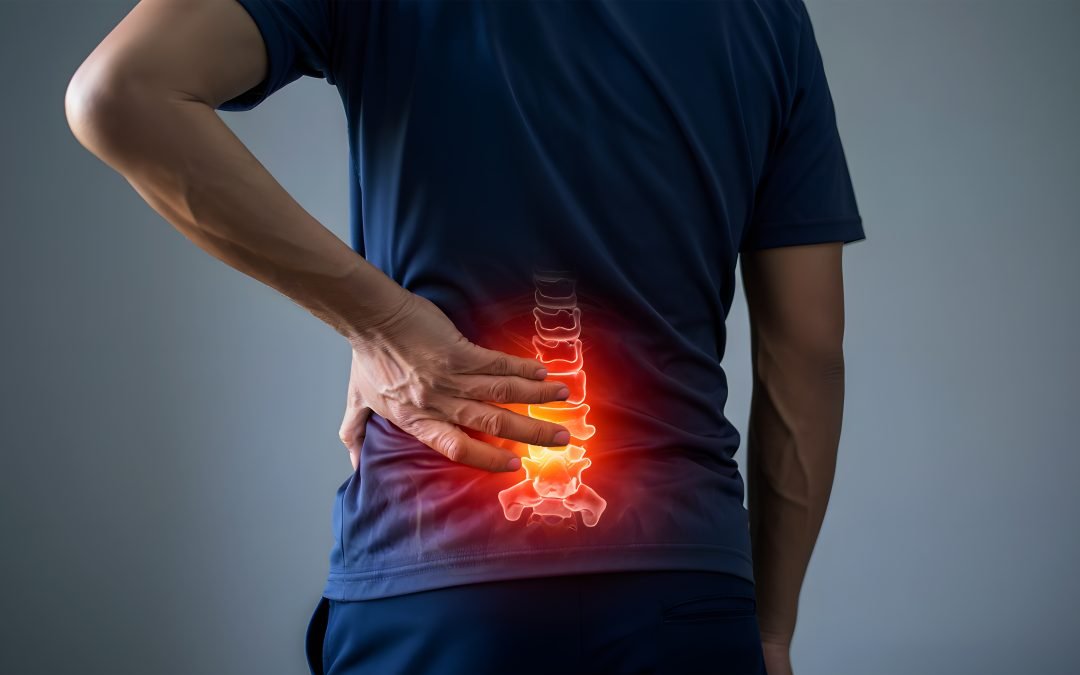
As we know, LBP is not uncommon. It is thought to be the leading cause of disability worldwide, affecting approximately 619 million people in 2020 (approximately 10% of the world’s population), and is thought to increase substantially in the years to come.
Low back pain can generally be categorised as either specific or non-specific:
- Specific: Caused by a certain disease or structural problem
- Non-specific: No specific cause or problem can be identified that is causing the pain. Essentially, the cause is unknown.
Interestingly, non-specific LBP makes up approximately 90% of LBP cases.
Next, I wanted to highlight some of the common misconceptions that we are often told about the causes of LBP:
Myth #1: Your hamstrings are too tight.
This is a common one that we often hear – your lower back is tight because your hamstrings are too tight. Now, whilst your hamstrings might well be tight if you have LBP, this does not mean that this is the cause of LBP, and I will explain why in terms of functional anatomy. In order from top to bottom, the body is structured like this: low back > gluteals > hamstrings. The most important structure here, are the gluteals. The ‘glutes’ are the largest muscle in the body, and hence are designed to absorb and create the largest amounts of force. When our glutes switch off or become less active (we will discuss the causes of this in Part 2 of this blog), something else must compensate, and this will generally be the hamstrings, and low back. In addition to this, due to potential postural changes, the hamstrings can also become long and weak, which can give them the impression of being tight, as they would be under more stretch than at typical resting length, and so naturally their range of motion will now be limited. So, although tight hamstrings may well be present with LBP, it is unlikely they are the actual cause.
Myth #2: You have ‘strained’ your lower back
Now, the muscles found in the low back region (namely the erector spinae, multifidus, and quadratus lumborum), are not built for large degrees of contraction and force output, as they do not move over a large range of motion. In fact, the lumbar spine is built for stability, not mobility. As such, it is in fact very difficult to actually strain the low back muscles. What is likely occurring instead, is excessive tension that has resulted in tightness and potentially spasm.
Myth #3: Structural damage: Interestingly, research has shown no strong correlations between structural damage to the low back, and pain. Approximate statistics show that only 50% of individuals with some kind of structural damage, such as broken/ fractured vertebrae, or herniated discs, have pain. The other 50% do not have pain. Vice versa, approximately 50% of individuals with no structural damage, have pain, whilst the other 50% of individuals have no pain. Therefore, no relationship exists between structural damage and pain. The one exception to this may be nerve involvement. If a herniated or ruptured disc is causing nerve entrapment or irritation, then this may well cause pain.
Now that we have examined some common misconceptions of LBP, we are ready to look at the most typical cause of LBP in Part 2 of this blog post.
Recent Comments