

Now that we have covered statistics, myths about the causes, and the actual causes of low back pain (LBP), we can now look at how we can correct it using a series of simple yet effective steps, which we will look at in this post.
Now, we know that the gluteals are typically the primary cause of LBP and dysfunction. So, all we really need to do is getting them working again as they were meant to. Let’s look now at how we can do this using simple corrective exercise methods:
- Release the tight muscles, primarily the hip flexors. As discussed, tight hip flexors are a common characteristic of low back pain, and before we strengthen the glutes, we need to first release the tight muscles that are occurring because of their weakened counterparts. There are 2 main ways we can do this:
- Massage – You can find a good remedial massage therapist or myotherapist who will be able to locate and release the hip flexors.
- Stretching – Hip flexors are fairly simple to stretch. I have included a link to my video on how to stretch the hip flexors at the end of this post.
Additionally, as mentioned in Part 2, the glutes can also become tight due to being forced to absorb load with continuous activity. This can also be a major contributor to LBP. As such, stretching the glutes, particularly the smaller, stabiliser muscles, can be quite effective, as the low back will eventually start to compensate when the glutes can no longer absorb any more force. I have included a link to a simple glute stretch at the end of this post.
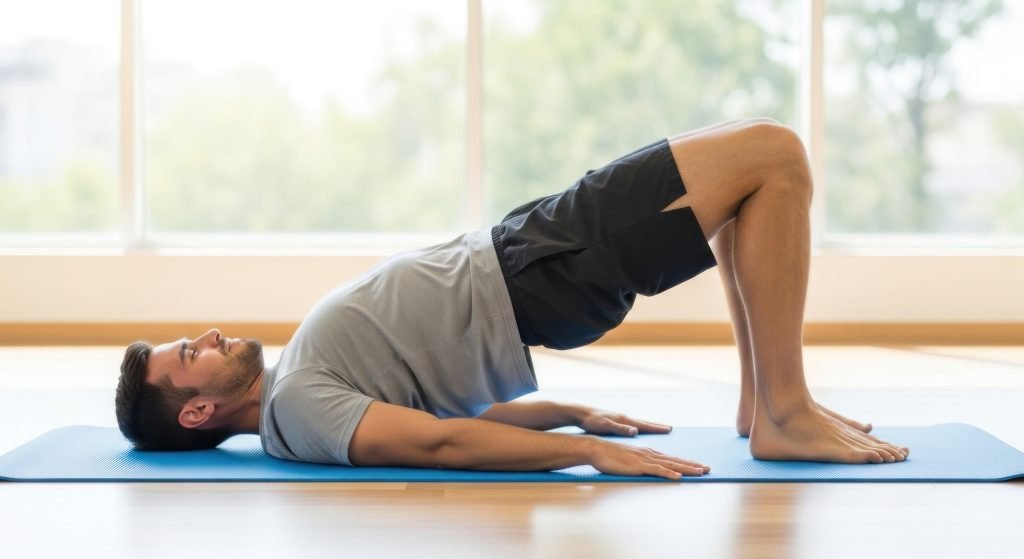
- Strengthen the weakened muscles, namely the gluteals. Primarily we want to strengthen the gluteus maximus, and there are many different exercises that we can use to do this. I have included the link to several exercises that can be used to specifically target the glutes at the end of this post.
- Strengthen the lower abdominals and low back muscles. Now that we have freed up the hip flexors and begun to reactive the glutes, we can build strength in the other surrounding muscle groups that are generally compromised. Long, weak abdominals can result in low back tightness and even lumbar lordosis (excessive curvature of the low back), and so strengthening these can help to stabilise and re-balance the low back. And lastly, now that the surrounding muscles have been corrected, we can start to rebuild strength in the low back, as pain and dysfunction can disrupt activation patterns, which cause further pain and problems. Additionally, when forced to absorb load excessive beyond their typical capability, the low back muscles typically won’t be able to activate and stabilise as they are meant to, so we can aim to strengthen these muscles as well. I have provided a link for exercises that can strengthen the lower abdominals and low back at the end of this post.
Good luck! 😊
Video Links:
Stretches
- Hip Flexor Stretch: Hip Flexor Stretch – YouTube
- Glute Stretch: Bench Glute Stretch – YouTube
Glute Activation
- Glute Bridge: Glute Bridge – YouTube
- Lunge: Lunge walk – YouTube
- Split squat: Split Squat (youtube.com)
Lower Abdominals
- Dish Hold: Dish – YouTube
Low Back
- Superman: Superman (youtube.com)
Recent Comments