

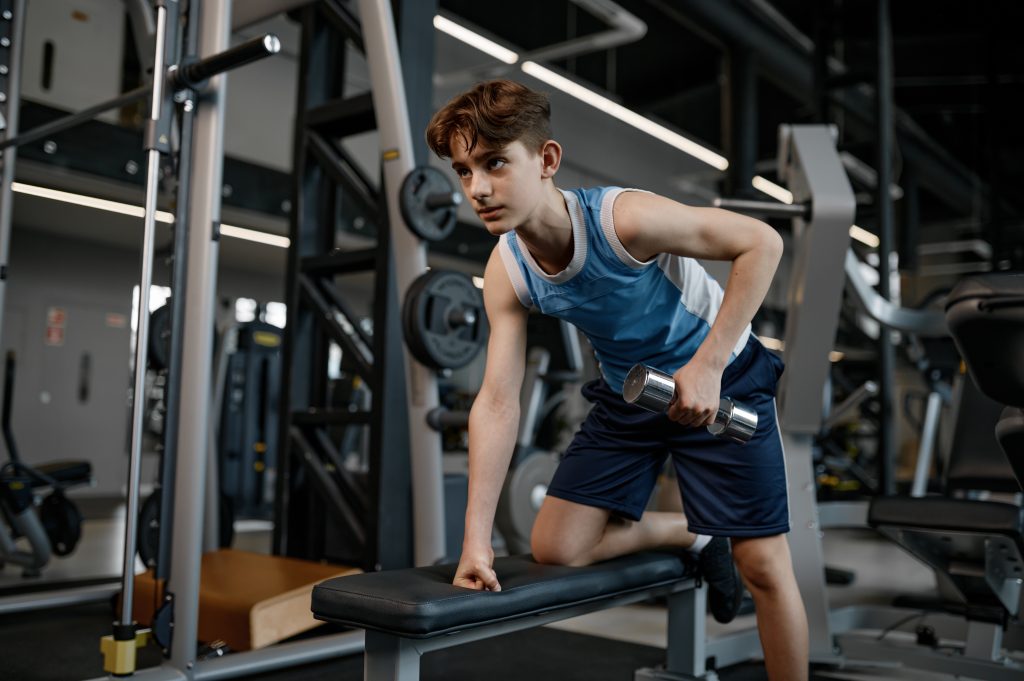
There has always been much debate and unclarified theories regarding weightlifting and adolescents. Some of these theories include:
- Resistance training stunts growth in adolescents
- Only adults should lift weights.
- Weights are not safe for children or adolescents.
- Weightlifting can cause injury in adolescent clients.
The good news is though, that there is absolutely ZERO evidence to support any of these claims, so essentially, we can pass these off simply as myths that carry no truth or scientific basis.
The even better news is, that resistance has only shown to provide BENEFITS in young people, and can actually enhance the natural growth and development process that occurs. The more typical benefits seen include the following:
- Increased muscular strength, power, and endurance.
- Improved body composition.
- Improved coordination and positional awareness.
- Increased balance, posture, and stability.
- Improvements in fundamental motor skills e.g. running, jumping, throwing.
- Improved sports performance
- Improved speed and agility
- Improved cardiovascular performance.
- Reduced risk of injury.
- Increased ligament, tendon, and bone strength.
In addition, numerous psychological and social benefits have also been observed, including:
- Improved confidence and self-esteem.
- Improved mood states.
- Decreased prevalence of anxiety and depression.
- Enhanced social connections.
It is also important to note that these benefits are typically seen in young people regardless of sex, age, or previous exercise or training history.
If you are interested in further information, numerous position stands have been published regarding young people and resistance training, namely from the National Strength and Conditioning Association (NSCA), the Australian Strength and Conditioning Association (ASCA), the United Kingdom Strength and Conditioning Association (UKSCA) and the Canadian Society for Exercise Physiology (CSEP). These organisations all collectively demonstrate the positive benefits seen in young people from participating in structured resistance training. With all of this being said, it is important to realise that anyone participating in unstructured, unsupervised resistance exercise, regardless of sex, age, or exercise history, may have a higher potential to cause either short- or long-term injury, due to incorrect exercise choice, execution, intensities or volumes. As such, it is important that if your young person is interested in beginning resistance exercise, that they are guided by a qualified professional. In doing so, this will ensure that they are performing suitable exercises with correct form, as well as suitable volumes and intensities for their age and current exercise capacity, which will maximise their potential of achieving all the benefits that resistance exercise has to offer for this specific population.
Recent Comments